2026 Wellness Program
2026 Wellness Program

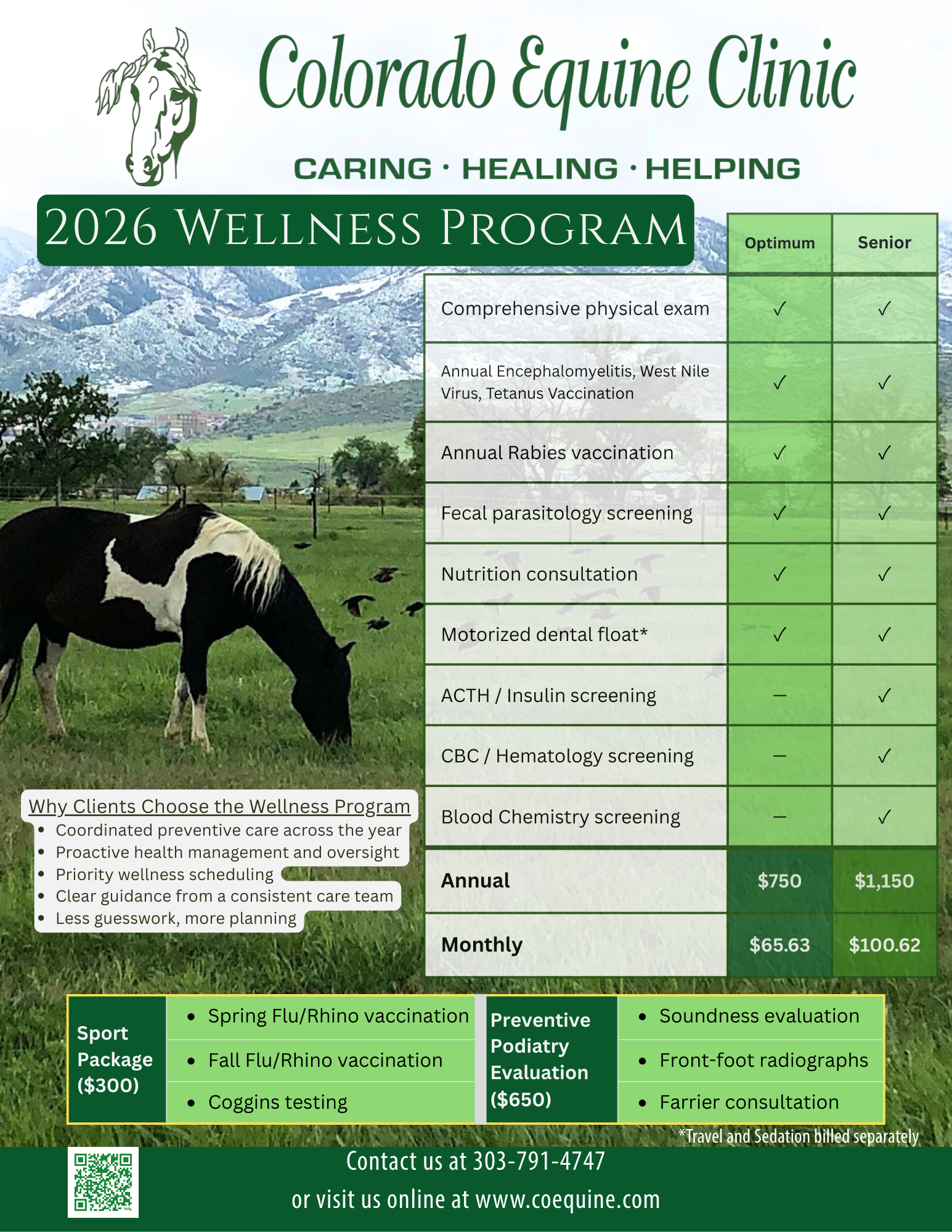
What's included and why it's important.
As part of the wellness program, each horse receives a comprehensive annual physical examination. This includes evaluation of overall body conformation and condition, attitude and neurologic function, musculature, heart and lung health, gastrointestinal function, and the eyes, ears, and nasal passages. These findings establish a baseline for your horse and help us identify subtle changes early, when intervention is most effective.
Annual core vaccinations are included to protect against Eastern and Western Encephalomyelitis, West Nile virus, Tetanus, and Rabies. These life-threatening but preventable diseases remain an ongoing risk, and vaccination is required by most boarding and training facilities. Keeping vaccines current protects not only your horse, but also the broader equine community.
Routine fecal testing is included to evaluate your horse’s parasite burden and guide targeted deworming recommendations. This approach supports effective parasite control while reducing unnecessary medication use and resistance. Many boarding facilities require fecal testing as part of responsible herd health management.
An annual nutrition consultation is included to assess body condition, workload, age, and individual health needs. We provide tailored feeding recommendations to support optimal weight, performance, and metabolic health. Proper nutrition is foundational to long-term wellness and disease prevention.
The wellness program includes a comprehensive dental examination and one motorized dental float when indicated. Routine dental care helps prevent pain, abnormal wear, and difficulty chewing, which can contribute to weight loss, poor performance, and digestive issues. Maintaining proper dental balance supports comfort, nutrition, and overall long-term health.
ACTH and insulin testing are included to screen for common endocrine disorders such as Pituitary Pars Intermedia Dysfunction (PPID) and Equine Metabolic Syndrome (EMS). These conditions often develop gradually and may be present before obvious clinical signs appear. Early identification allows for timely management, reducing the risk of complications such as laminitis.
A complete blood count (CBC) is included to evaluate red and white blood cells and overall immune function. This test can identify anemia, inflammation, infection, or early signs of systemic disease before clinical symptoms are evident. CBC results provide valuable baseline data for monitoring changes in your horse’s health over time.
Blood chemistry testing is included to assess organ function, including the liver, kidneys, muscles, and metabolic systems. These values help detect early or subclinical disease that may not yet be apparent on physical examination. Establishing baseline chemistry results supports proactive care and more accurate interpretation of future health changes.
The Sport package includes semi-annual vaccination against Equine Influenza and Rhinopneumonitis, along with annual Coggins testing. These measures are essential for horses that travel, compete, or are exposed to outside horses, and are commonly required by boarding, training, and competition facilities. Maintaining current protection and documentation supports both individual horse health and regulatory compliance.
The preventative podiatry service includes a comprehensive hoof evaluation to assess balance, wear patterns, and overall foot health. Regular podiatric assessment supports soundness, performance, and long-term joint health by identifying subtle changes before they lead to lameness. Findings help guide appropriate trimming and shoeing recommendations in coordination with your farrier.
I first became involved with horses at a later age, after a lifetime of owning dogs. Over the years, the small animal health care has advanced greatly, compared to the early days when you would only visit a vet for a rabies shot. Yearly wellness exams are now commonplace, that include comprehensive physical exams, vaccinations, blood tests, dental exams and cleanings, and nutritional assessments. Such exams have proved very beneficial in the health and wellbeing of my dogs.
So, when I bought my first horse, I was surprised that similar wellness programs for horses were uncommon. I found that the traditional healthcare for horses was comprised of vaccinations clinics twice a year, and dentals is needed. Beyond that, vets were only called when a horse was injured, showed obvious outward signs of illness, or showed signs of lameness. In other words, the vets were called only after something obviously broken.
I want my horse to be healthy and live a long and fruitful life. This is only possible if we begin to diagnose impending problems in the horse’s health, well before they have obvious outward clinical signs. This demands a comprehensive wellness program aimed at diagnosing and treating problems before they do irreparable damage to the horse. I see too many horses, that had their useful lives cut short due to pathologies that went undiagnosed until permanent damage was done. With early diagnosis, and early intervention, many of these pathologies can be addressed before it is too late.
I’ve had my two horses enrolled in CEC’s wellness program for three years. They can serve as real-world examples of the benefit of wellness programs. Overall, both horses are healthy, ridden regularly, and show no obvious signs of lameness. The following are three instances where the wellness exams identified subtle pathologies that we were able to address before they became serious.
· The comprehensive lameness exam identified a slight soreness and swelling in a suspensory ligament. Early detection allowed us to put a plan in place to address and monitor the issue, before it becomes a more serious.
· A routine blood test revealed a slightly high insulin level, leading me to further decrease the sugar content of my horse’s diet, to help avoid a potential laminitic episode.
· Routine hoof radiographs have allowed me to maintain optimal hoof geometries relative to the coffin bone. This includes the hoof’s palmer angle, location of breakover, sole thickness, wall relationship to coffin bone, etc. Even minor imbalances in a horse’s hoof can, overtime, lead to various serious lameness issues.
In summary, I wholeheartedly believe in comprehensive wellness programs for our horses. They deserve it. Thank you CEC!
Sincerely,
Mark Gilbert