

Before You Need to Administer First Aid
Keep Colorado Equine Clinic's phone number accessible and maintain a well-stocked first aid kit in a clean, dry location. Anyone who routinely cares for your horse should know where emergency supplies are stored.
Practice checking your horse's temperature, pulse, respiratory rate and capillary refill time before an emergency occurs. Knowing what is normal for your horse can make important changes easier to recognize.
Know Your Horse's Normal Vital SignsBuild and Maintain a First Aid KitRecognize When to Call a VeterinarianProvide Safe, Basic Wound CareRespond to Possible ColicCheck Temperature, Pulse and Respiration
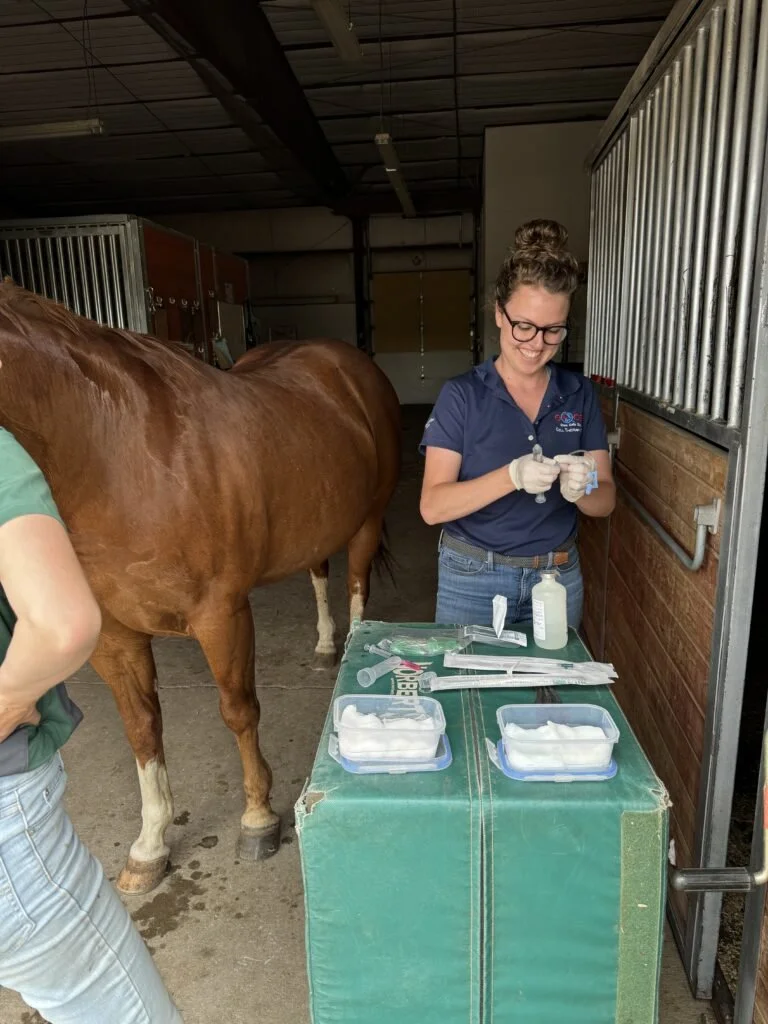
First Aid Measures
In an urgent situation, the veterinary team focuses on quickly assessing your horse, stabilizing immediate concerns and determining the safest next step for care.
Rapid Assessment
Vital signs, circulation, breathing, pain, neurologic function and the severity of the illness or injury are evaluated.
Immediate Stabilization
Care may involve pain management, wound treatment, fluid therapy, hemorrhage control, diagnostic testing or other supportive measures.
Continued Monitoring
Your horse's response is monitored so treatment can be adjusted and additional care, hospitalization or referral arranged when needed.
Seek veterinary help immediately for severe colic, uncontrolled bleeding, difficulty breathing, sudden neurologic changes, serious wounds, collapse or inability to bear weight. Do not administer medication unless directed by a veterinarian.
Protect Yourself While Helping Your Horse
Horses that are injured, frightened or in pain may behave unpredictably. Stay calm, remain aware of your surroundings and never place yourself in danger while trying to assist your horse.
If safe handling is not possible, wait for veterinary assistance rather than risking injury to yourself or others.
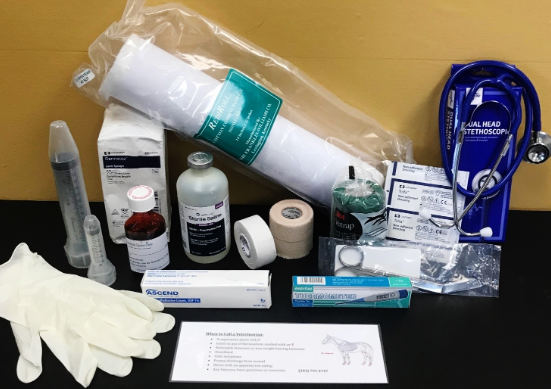
Preparing a First Aid Kit
Preparation and early recognition can make an important difference during an equine emergency.
Learning your horse's normal vital signs, keeping appropriate first aid supplies available and knowing when to call your veterinarian can help you respond more confidently while veterinary care is on the way.