
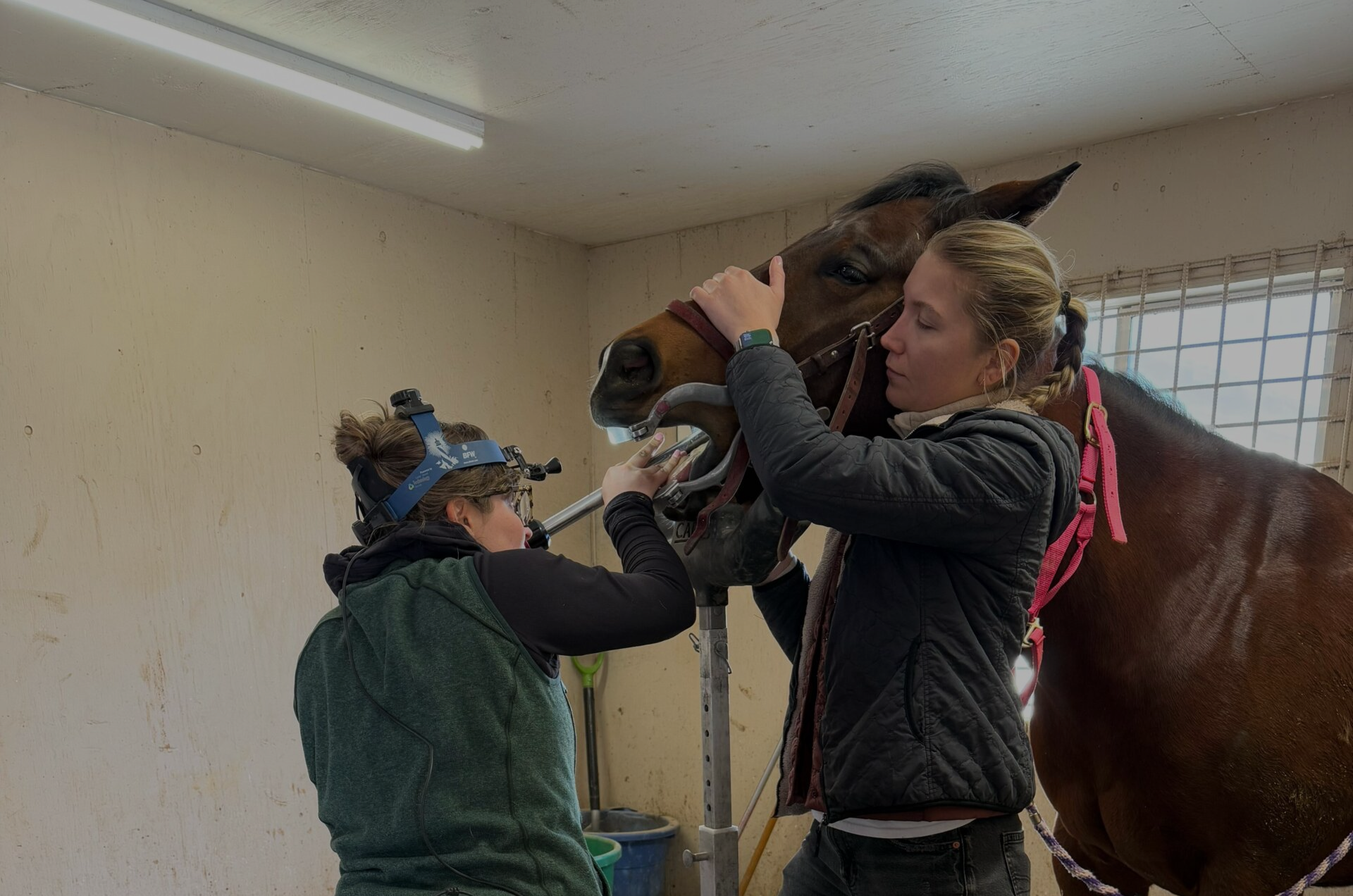
Why Routine Dental Care Matters
Dental health plays an important role in your horse's comfort, nutrition, performance and overall well-being.
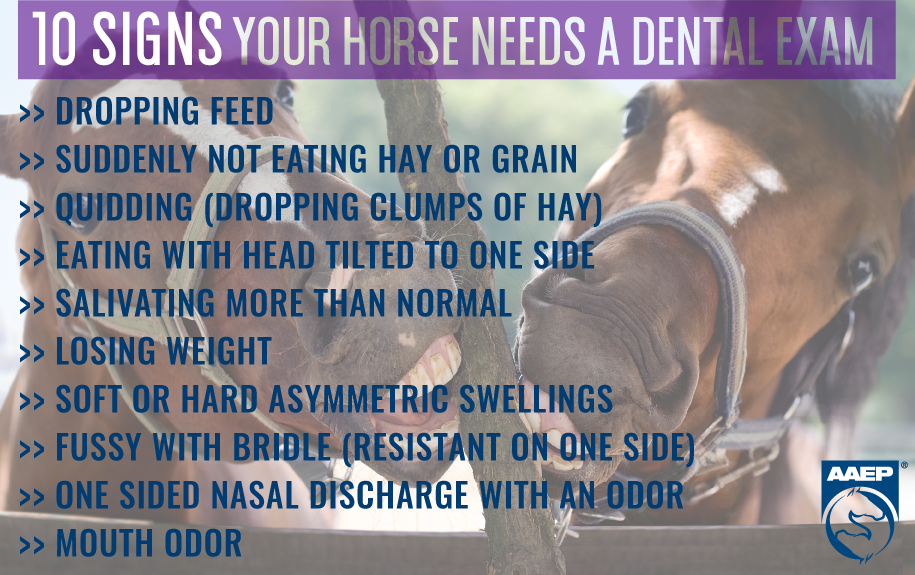
Regular veterinary dental examinations help identify abnormal wear, oral disease and developing problems early, before they begin to significantly affect eating, behavior or performance.
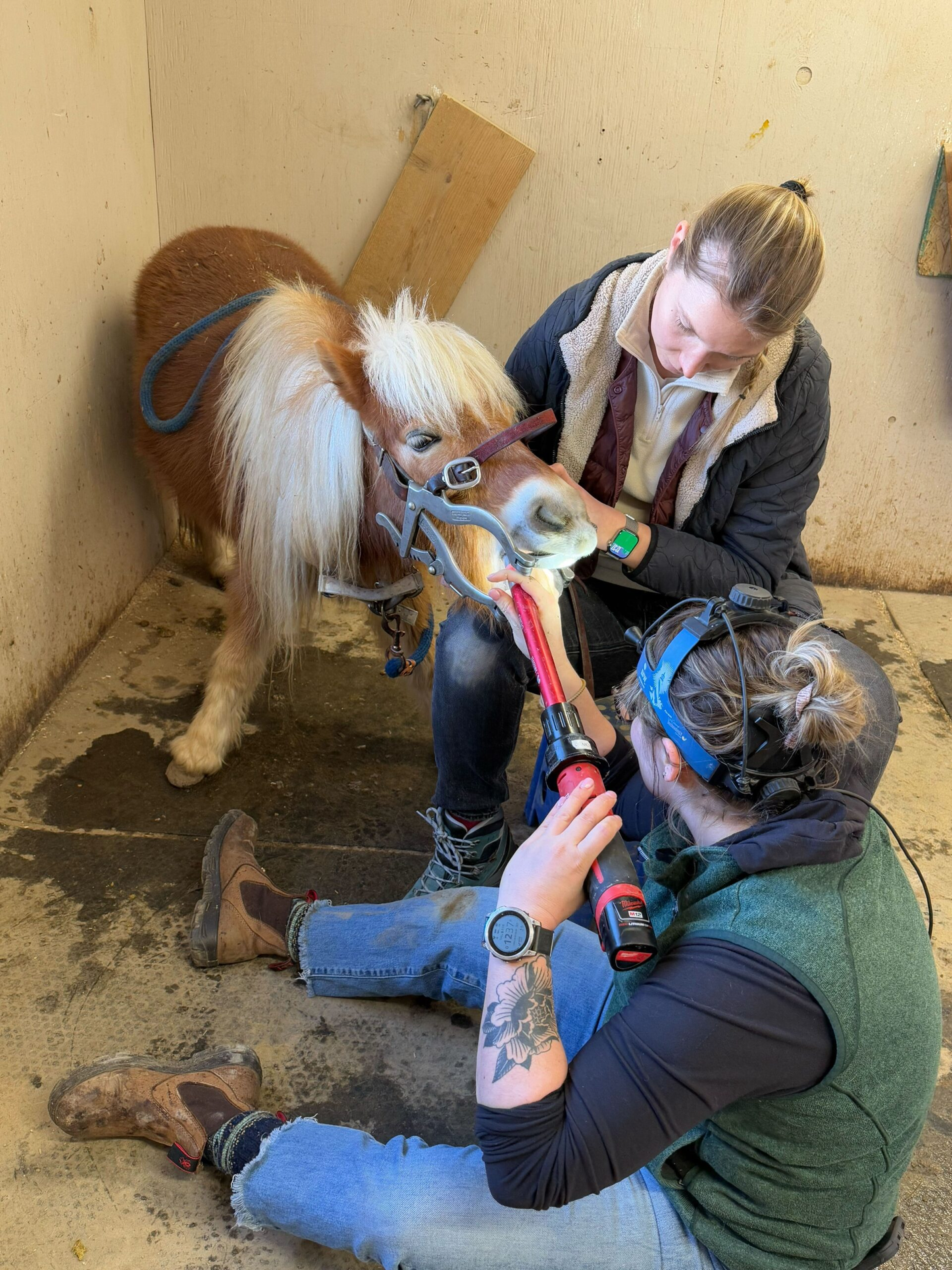
Our veterinarians use both modern power equipment and precision hand instruments to provide careful, individualized dental care.
Dental Care Through
Every Life Stage
A horse's mouth changes throughout life. Young horses require attention as permanent teeth erupt, while mature and senior horses may need increasingly individualized management as patterns of wear develop.
A Thorough Oral Examination
Comprehensive examinations are performed under appropriate sedation so the veterinarian can safely inspect the entire mouth rather than only the teeth visible from the front.
Complete Evaluation
Teeth, gums, alignment and patterns of wear are assessed throughout the mouth.
Individual Treatment
Treatment is based on what is found during the examination rather than performed as a one-size-fits-all procedure.
Long-Term Management
Regular monitoring helps us recognize changes and develop an appropriate dental schedule for each horse.
For a More Complete View of Your Horse's Oral Health
When an examination suggests a deeper problem, digital dental radiography can provide information that cannot be seen by looking inside the mouth alone.
Dental radiographs can help evaluate tooth roots, fractures, infection and other complex conditions and can be performed with our mobile equipment when appropriate.Dental conditions can influence eating, comfort, behavior and performance. A comprehensive veterinary examination allows us to identify both common wear abnormalities and more complex oral disease.
Sharp enamel points and uneven wear
Hooks, ramps and wave mouth
Periodontal disease and tooth-root infection
Wolf teeth and retained caps
Malocclusion affecting bit comfort
EOTRH
Fractured, loose or missing teeth
Temporomandibular joint dysfunction
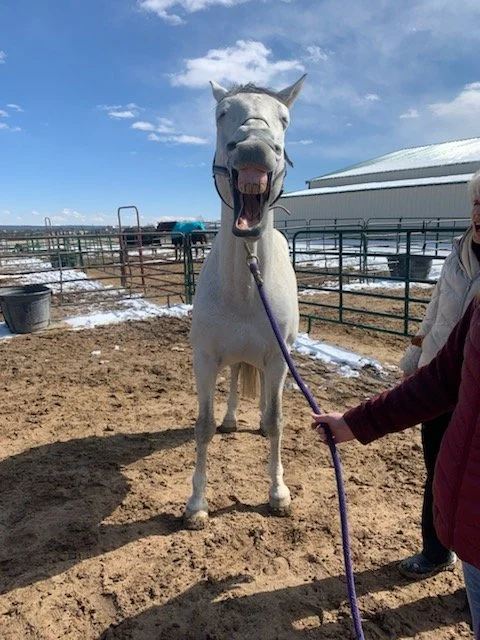
Equine Floating to
Maintain Comfortable, Functional Teeth
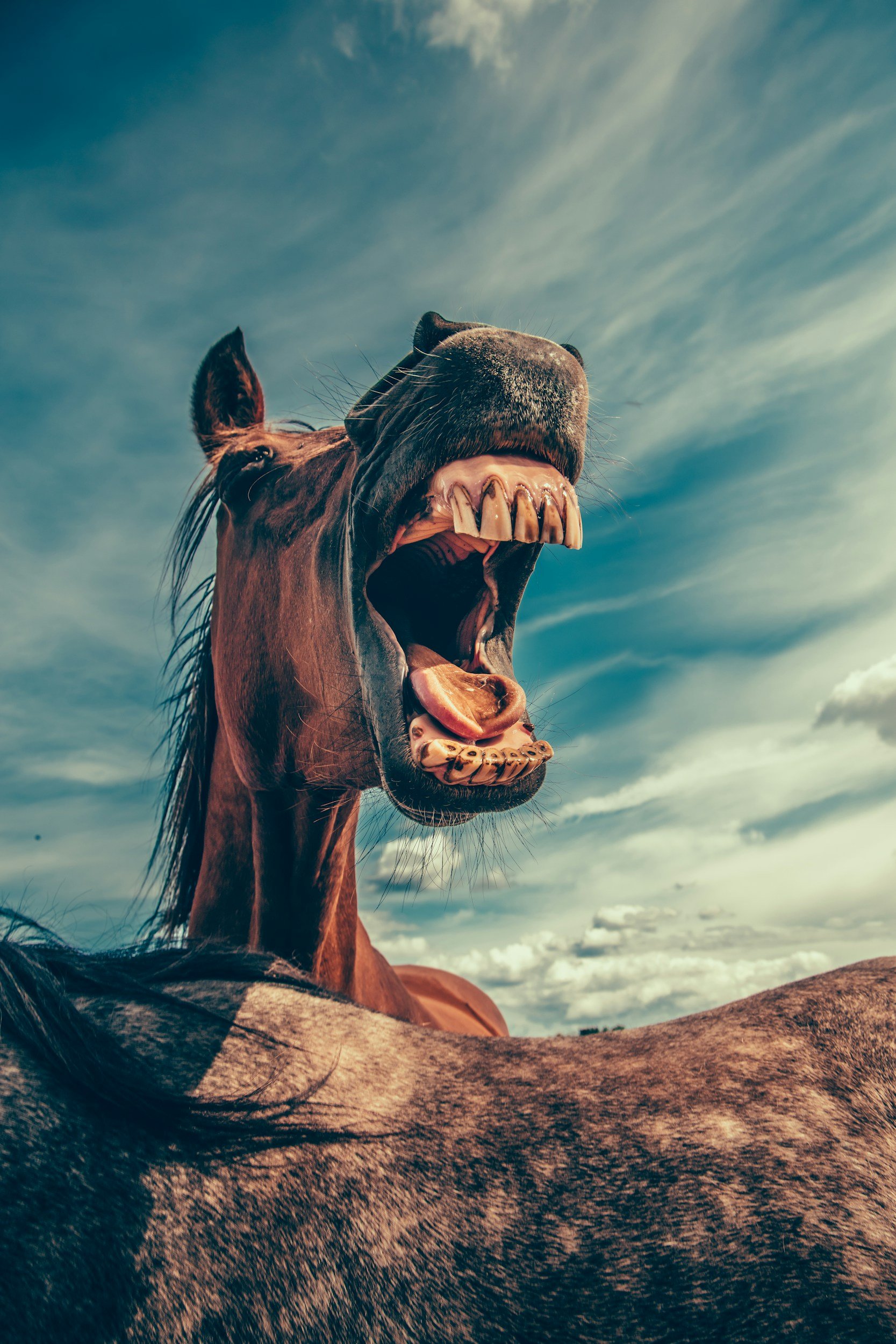
Horses' teeth continue to erupt throughout much of their lives. Natural chewing creates wear, but that wear does not always occur evenly.
Floating carefully smooths problematic enamel points and addresses certain abnormal wear patterns when treatment is indicated.
Procedures are performed under sedation with appropriate motorized and hand instruments. The goal is conservative: correct what is necessary while preserving healthy tooth structure.