
Regenerative Medicine and Orthobiologics
Regenerative medicine, also known as orthobiologics, uses the body’s own biological resources to replace or regenerate cells and tissues, helping restore normal function.
All cells begin from a stem cell, much like a plant begins from a seed. Stem cells are found throughout the body, allowing old or damaged cells to be replaced and specialized tissues to develop.
When regenerative treatments are considered, the first step is always an accurate diagnosis. We evaluate the whole horse, identify the tissue involved, and address mechanical interferences that may be preventing healing before discussing the best treatment options with you.

PRP Preparation and Use
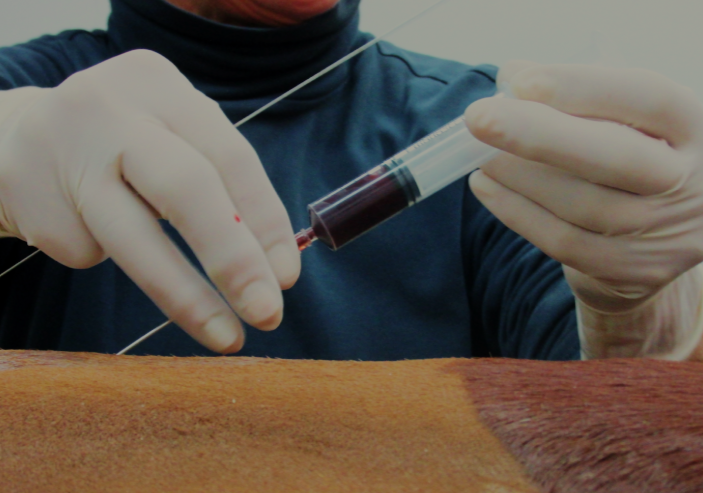
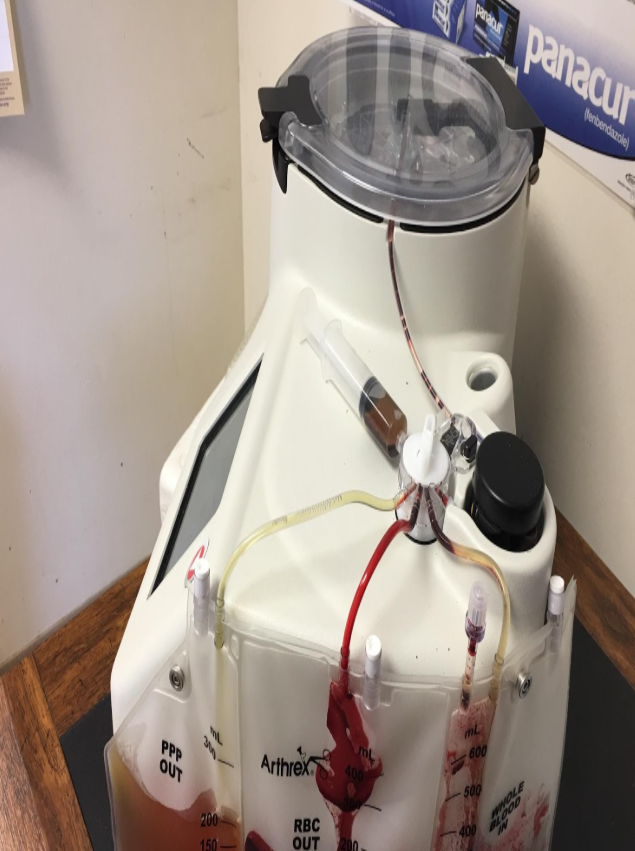
For PRP preparation, blood is withdrawn from the horse and mixed with an anticoagulant. It is spun in specialized centrifuges, allowing platelets to be concentrated and withdrawn. The process takes approximately 30 minutes, and PRP can be used immediately or frozen for future application.
PRP is commonly considered for tendon and ligament injuries, joints, and selected cases involving the sacroiliac region. Because PRP can support both joint and soft-tissue structures, it can be especially useful where both are affected.
Autologous Conditioned Serum / IRAP
Autologous Conditioned Serum, or ACS / IRAP, is a composite of blood proteins that includes Interleukin-1 receptor antagonist protein and some growth factors. It is used to counteract damaging inflammatory proteins that may be present in an arthritic joint.
ACS is prepared by collecting blood into specialized syringes, followed by centrifugation and refrigeration. A common indication for IRAP is osteoarthritis.
Stem Cells
Stem cells are the originators of all cells in the body. They can become specialized cells when directed by their environment. At CEC, stem cells may be harvested from bone marrow, concentrated, and injected into damaged tissue within hours.
Stem cells may be injected into joints or tendons, or used through regional limb perfusion. They can migrate toward areas where they are needed and differentiate into the cell type needed in that area.
Factors for Successful Treatment
An accurate diagnosis of the whole horse
PRP preparation using advanced centrifuges
Sterile, ultrasound-guided injection technique
Physical therapy following injection
Recognition and treatment of mechanical interferences
A Thoughtful, Individualized Approach
Each case is unique, and every horse’s diagnosis, needs, and goals are considered when building a treatment plan. Regenerative therapies can offer an opportunity to support healing using the animal’s own biological resources and the right environment for recovery.